



Podcast: Play in new window | Download | Embed
Subscribe: Apple Podcasts | Spotify | Amazon Music | Android | RSS
Key Takeaways
- Smart eyewear is shifting from a tech novelty to a lifestyle and accessibility solution.
- The future of smart eyewear adoption depends on storytelling, patient education, and real-world applications—not just features.
- Optometrists and opticians have a unique opportunity to guide patients toward technology that improves connectivity, accessibility, and everyday experiences.
Topics Covered
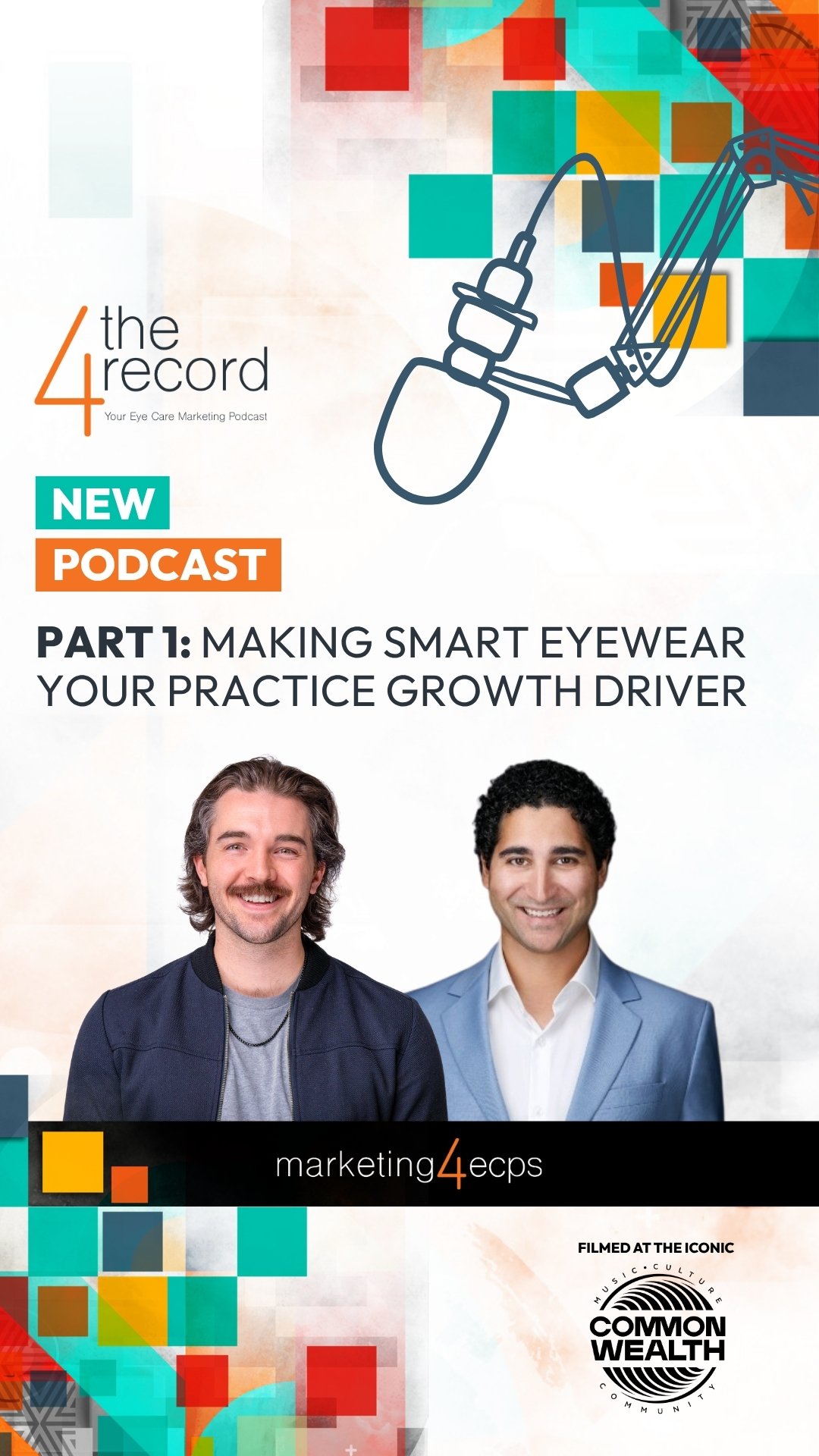
Smart eyewear is no longer just a futuristic concept or niche tech accessory. Artificial intelligence, accessibility tools, and wearable technology are beginning to reshape how patients interact with eyewear in their daily lives. During a recent episode of For the Record, Tyler Kemp sat down with Marty Hosseiny of EssilorLuxottica to discuss how smart eyewear is evolving from a novelty product into a meaningful lifestyle and patient care solution. Their conversation explored the growing role of AI-powered connectivity, accessibility, fashion-forward design, and why optometrists and opticians may play a major role in driving the next wave of adoption
Smart Eyewear Is Changing the Optical Conversation
For years, eyewear focused primarily on vision correction and protection. Smart eyewear expands that purpose by adding functionality that helps people stay connected, informed, and engaged in their daily lives. More importantly, the conversation is evolving beyond technology specifications and battery life. The focus is now on outcomes, accessibility, convenience, and human connection.
As Marty Hosseiny explained, “The focus should be more on those moments.”
That shift in perspective may be one of the biggest reasons smart eyewear is beginning to gain real traction within the optical industry.
Moving Beyond Features to Real-Life Applications
One of the strongest themes from the discussion was that smart eyewear should not be marketed like a traditional tech gadget. Patients are not simply buying cameras in frames or speakers in temples. They are investing in experiences that make life easier and more connected.
The podcast highlighted how smart eyewear can help reduce screen time while still allowing users to stay informed and productive. Instead of constantly looking down at a phone, users can interact with technology more naturally and hands-free.
The discussion also explored how translation technology is already creating meaningful real-world impact. Marty shared a personal example from Vision Expo where live translation features helped him participate in conversations with French-speaking customers despite not being bilingual.
That application extends far beyond convenience. Smart eyewear has the potential to improve travel experiences, communication, workplace productivity, and social interactions without forcing a phone or screen between people.
Tyler Kemp summarized this evolution perfectly when discussing how AI-powered connectivity creates a feeling rather than simply delivering a feature set
Accessibility Is Becoming a Major Driver
Another major takeaway from the conversation was the role that smart eyewear may play in accessibility and low-vision support.
The technology is beginning to move beyond entertainment and convenience into areas that can genuinely improve the quality of life. During the episode, Marty explained how AI-powered smart eyewear can assist visually impaired patients by reading small print, providing navigation assistance, and helping users better understand their environment.
For patients with macular degeneration or low vision challenges, these tools may create new opportunities for independence and confidence. While smart eyewear is not intended to replace medical devices, it may become a valuable complementary tool for certain patient populations.
One particularly impactful point from the discussion focused on how these products allow patients to remain present in their environment while still accessing information. Rather than isolating individuals behind screens, the technology has the potential to create more seamless human interaction.
That concept represents a major shift in how wearable technology is perceived.
The Opportunity for Optometrists and Optical Teams
Perhaps the most important insight from the episode was the role optometrists and opticians will play in the future of smart eyewear adoption.
Many practices still view the category as a novelty or feel uncomfortable discussing the technology because they lack confidence in their product knowledge.
However, the discussion emphasized that patients trust their eye care providers to guide them toward solutions that improve their lives. That trust creates an enormous opportunity for practices willing to learn the category and integrate it into lifestyle conversations.
Instead of simply presenting smart eyewear as a gadget, practices should ask more meaningful lifestyle questions:
- Do patients listen to music while walking?
- Do they travel frequently?
- Are they struggling with hearing conversations in loud environments?
- Do they want to reduce screen time?
- Would accessibility tools improve their independence?
Those conversations create natural opportunities to introduce smart eyewear solutions in a way that feels personalized and relevant.
The episode also stressed the importance of training and education within practices. Creating a “smart eyewear champion” inside the office can help teams become more confident and comfortable discussing the technology with patients.
The Future of AI-Powered Smart Eyewear
The next wave of innovation may expand even further into hearing assistance and accessibility support. One example discussed during the podcast was Nuance smart eyewear, designed to support individuals with mild to moderate hearing loss while maintaining a fashionable appearance.
This reflects a broader industry trend in which eyewear is evolving into a multifunctional platform that integrates vision, hearing, communication, and AI-driven assistance.
For optometry practices, the opportunity is larger than simply selling another product category. Smart eyewear offers an opportunity to strengthen patient relationships, personalize recommendations, and position practices at the forefront of innovation.

