



Podcast: Play in new window | Download | Embed
Subscribe: Apple Podcasts | Spotify | Amazon Music | Android | RSS
Key Takeaways
- Real people empowered by AI: Teem’s virtual assistants are trained remote professionals who use AI tools to support eye care practices, not automated bots replacing employees.
- Four practical applications: AI can assist with insurance claim reviews, rejection code interpretation, clinical documentation, and patient communication.
- Practice efficiency with human oversight: Independent and corporate eye care practices can explore AI-supported workflows while keeping trained professionals responsible for reviewing information and taking appropriate action.

Running a successful optometry practice requires more than delivering excellent patient care. Insurance billing, clinical documentation, and patient communication all compete for valuable staff time. For independent practice owners and corporate eye care organizations, managing these responsibilities efficiently is essential to maintaining a productive team and positive patient experience.
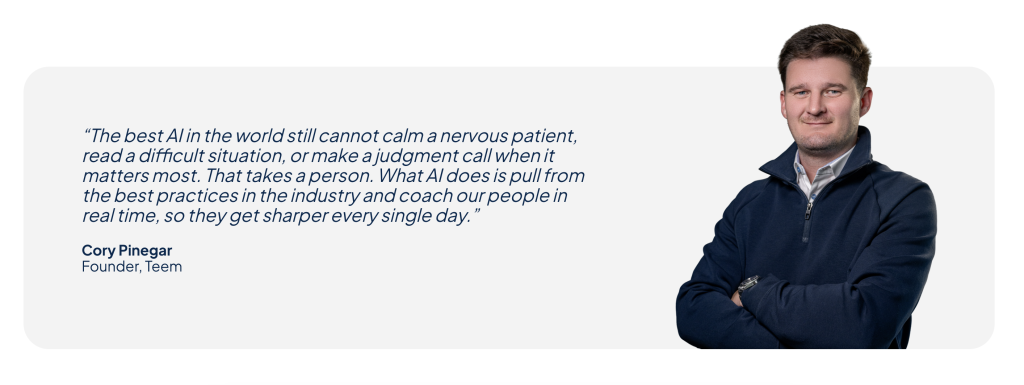
Virtual assistants in optometry offer one potential solution, and Teem is demonstrating how artificial intelligence can strengthen their capabilities. Unlike automated chatbots, Teem’s virtual assistants are real people who work remotely to support eye care practices. AI helps them analyze information, identify potential errors, and complete tasks more efficiently while maintaining human oversight.
During a Defocus Media conversation, Dr. Darryl Glover spoke with Alex Streit of Teem about the company’s human-led, AI-empowered approach. Rather than simply discussing AI’s potential, Streit demonstrated four practical scenarios showing how virtual assistants can use technology to support everyday optometry operations.
What Makes Teem’s AI-Powered Virtual Assistants Different?
Teem combines trained remote professionals with AI tools that support insurance claims management, clinical documentation, and patient communication. These virtual assistants function as extensions of the practice team, following established procedures while using technology to access information and complete administrative responsibilities. Defocus Media previously examined the broader staffing benefits in Virtual Assistants in Eye Care: How Teem Solves Staffing Challenges. Defocus Media
The important distinction is that AI does not replace the virtual assistant. It provides recommendations and identifies potential issues, while a trained professional reviews the information and determines the appropriate next steps. This approach allows practices to introduce advanced technology while preserving human judgment and accountability.
Four Real-World Scenarios: How Teem Uses AI in Optometry
Scenario 1: Identifying Insurance Billing Errors Before Submission
A small billing discrepancy can create additional work and delay reimbursement. During the demonstration, Streit showed how Teem’s virtual assistants use AI to review clinical and billing information before submitting an insurance claim. The system identified a date mismatch and a refraction documented during the examination but missing from the invoice.
Instead of automatically changing the claim, the virtual assistant could investigate these discrepancies and decide whether corrections are appropriate. For practice owners, this workflow adds a checkpoint that may reduce avoidable errors and improve claims management.
Scenario 2: Understanding Insurance Denials and Rejection Codes
Insurance denials can be challenging when payers provide unfamiliar codes or limited explanations. Teem demonstrated how its AI tools can help virtual assistants interpret rejection information and identify possible next steps. In one example, the system recognized a duplicate claim issue, allowing the assistant to investigate whether the service had already been submitted.
This capability can help experienced employees research unfamiliar situations while supporting newer virtual assistants who are learning insurance billing procedures. The human assistant remains responsible for verifying the payer’s response and determining the appropriate action.
Scenario 3: Supporting Clinical Documentation and ICD-10 Coding
Clinical documentation requires accuracy and attention to detail. Teem’s virtual scribes can assist optometrists during examinations by documenting relevant information in the electronic health record. AI provides additional support by helping assistants identify possible ICD-10 codes based on clinical descriptions.
During the demonstration, the AI tool generated several coding options for review. The virtual assistant could then confirm the appropriate information with the doctor before completing the documentation. This approach may reduce administrative demands while ensuring clinical decisions remain with the treating provider.
Scenario 4: Improving Patient Communication and Brand Consistency
Consistent patient communication is important for both independent practices and multi-location eye care organizations. Teem demonstrated how virtual assistants use AI projects containing practice-specific templates, policies, and communication preferences to prepare patient messages.
In one scenario, the assistant used an approved template to create an appointment reminder with the appropriate details. This approach helps maintain consistent messaging while allowing the human assistant to personalize communication when needed. It can also help newer team members learn a practice’s standards more efficiently. The importance of consistent procedures and delegation was also explored in Defocus Media’s Optometry Virtual Assistants: How Better Systems Create Growth. Defocus Media
Why Human Oversight and Training Matter
The success of AI-powered virtual assistants depends on proper training, human verification, and responsible handling of patient information. Streit explained that Teem uses Claude, developed by Anthropic, through an arrangement that includes a business associate agreement. He also emphasized that virtual assistants receive training on appropriate use of the technology.
Teem’s approach includes client approval before introducing AI tools and practice-specific knowledge resources that help employees learn established workflows. Streit noted that the demonstrated capabilities were included in existing subscriptions at the time of the conversation, subject to client approval. Practices should confirm current terms and availability directly with Teem.
What Does This Mean for Optometry Practice Owners?
For independent optometry practices, AI-enabled virtual assistants may help reduce administrative pressure while allowing in-office staff to focus more attention on patients. Corporate eye care organizations may find opportunities to improve workflow consistency, employee training, and administrative support across multiple locations. An earlier Defocus Media feature, Virtual Assistants in Optometry: The $20K Cost Advantage with Teem, explored how virtual staffing can also influence practice operating costs and administrative efficiency. Defocus Media
The four scenarios demonstrate how Teem combines human expertise with technology to support everyday practice operations. While measurable outcomes will depend on implementation, the approach offers a practical framework for evaluating how virtual assistance fits into modern optometry practice management.
The future of virtual assistants in optometry is not about replacing people with AI. It is about empowering real professionals with better tools to support practices and improve the patient experience.
Watch the Full Demonstration
See how Teem’s human-led, AI-empowered virtual assistants support real eye care workflows in the Defocus Media conversation with Dr. Darryl Glover and Alex Streit. Learn more about Teem’s virtual assistant services for optometry practices or explore additional conversations at Defocus Media. Teem

