



Podcast: Play in new window | Download | Embed
Subscribe: Apple Podcasts | Spotify | Amazon Music | Android | RSS
Key Takeaways
- Better conversations uncover overlooked opportunities. Patients may be interested in contact lenses but assume their optometrist will introduce the option.
- Lifestyle should guide lens selection. Understanding working distances, visual demands, and comfort concerns supports more personalized recommendations.
- Clinical expertise supports practice growth. ACUVUE technology, fitting resources, and consistent evaluation can help optometrists address patient needs while creating opportunities for continued care.
Some of the greatest opportunities in optometry may already be sitting in the examination chair, waiting for a conversation that never happens. Patients who have worn glasses for decades may never have considered contact lenses, while others have accepted blurry computer screens, uncomfortable lenses, or reading glasses as unavoidable parts of daily life. For optometrists, recognizing these unmet needs can improve patient care while uncovering opportunities to increase contact lens revenue.
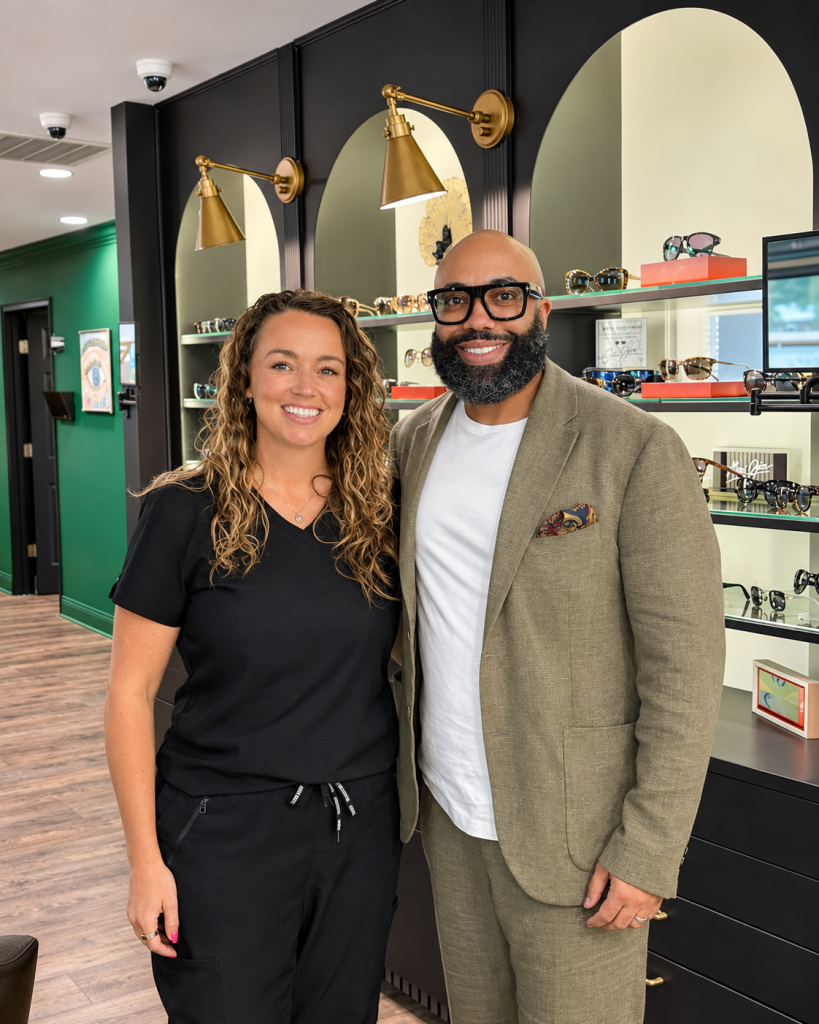
At See Easy Eye Care in Amelia Island, Florida, Dr. Tonia Bradley approaches contact lens prescribing by first understanding how patients live and work. In a conversation with Dr. Darryl Glover, she explains how better communication, thoughtful lens selection, and advances in ACUVUE contact lens technology can reveal opportunities that might otherwise be missed. Her experiences offer practical lessons for practicing optometrists and students preparing to enter the profession.
How Can Optometrists Increase Contact Lens Revenue?
Contact lens revenue opportunities can arise when optometrists identify patients who have never considered contact lenses, recognize unmet visual needs, and introduce appropriate options. These conversations may lead to additional fittings while strengthening the patient experience.
One of the biggest barriers is surprisingly simple: patients and optometrists sometimes wait for each other to start the conversation.
Dr. Bradley explains that patients may assume their doctor will recommend contacts if they are suitable candidates. Meanwhile, optometrists may assume interested patients will ask. Consequently, the opportunity to explore another form of vision correction never arises.
Her perspective is direct: “Everything can be solved by fixing communication.”
That does not mean every patient should wear contacts. It means patients deserve to understand their options before deciding what works best for them.
Dr. Glover recognizes the business implications, noting the potential for additional revenue when practices introduce contact lenses to patients who have never considered them. Beyond the initial fitting, a positive experience can also encourage continued care and strengthen patient relationships.
Defocus Media explored similar themes in How to Improve the Contact Lens Patient Journey and Grow Your Practice, emphasizing the role communication plays in improving the patient experience.
Why Patient Lifestyle Matters in Contact Lens Selection
Successful contact lens prescribing requires understanding more than refractive error. Daily activities, working environments, visual demands, and previous experiences influence which lens may be appropriate.
Dr. Bradley illustrates this through several clinical scenarios.
For a teenage athlete with astigmatism who has never worn contacts, she considers the convenience of daily disposable lenses and ACUVUE Blink Stabilized Design technology, which uses eyelid interaction to help maintain toric lens orientation.
For an adult spending long hours at computer screens who prefers reusable lenses, the discussion shifts toward comfort, wearing habits, and replacement schedules.
Rather than asking whether contacts feel comfortable, Bradley wants to know when patients remove their lenses and whether discomfort develops later in the day. These questions can reveal concerns that patients might otherwise overlook.
Her approach reflects an important clinical distinction: complaints about vision and comfort are not always separate.
That relationship is explored further in Defocus Media’s article on vision and comfort in contact lenses.
Regardless of lens type, appropriate replacement schedules and patient education remain essential. The CDC’s guidance on contact lens types and wearing schedules provides additional information on safe lens use.
The lesson is consistent: understand the patient’s lifestyle before recommending a lens.

How to Improve Multifocal Contact Lens Fitting With ACUVUE Technology
Presbyopic patients frequently present complex visual demands because their daily activities require clear vision at multiple distances.
During the episode, Dr. Bradley considers a 58-year-old nurse practitioner who moves between examination rooms, computers, and patient interactions while experiencing dryness and visual difficulties.
Rather than immediately selecting a multifocal lens, she considers the patient’s lifestyle and evaluates the ocular surface.
ACUVUE OASYS MAX 1-Day MULTIFOCAL becomes an important option because of its Pupil Optimized Design technology. Johnson & Johnson describes 183 optical profile designs intended to account for variations in pupil size associated with age and refractive error.
The lens also incorporates TearStable Technology, designed to support tear-film stability, and an OptiBlue light filter. These features should be evaluated alongside the patient’s clinical findings and visual performance.
More information is available through the ACUVUE OASYS MAX 1-Day MULTIFOCAL professional overview.
Equally important is Dr. Bradley’s fitting process. She performs an accurate refraction, uses red-green balancing, evaluates sensory ocular dominance, and follows the manufacturer’s recommendations.
Her advice is refreshingly straightforward: “I just follow the fit guide.”
Dr. Bradley’s approach to multifocal fitting:
- Understand visual demands: Identify how patients use distance, intermediate, and near vision.
- Evaluate ocular health: Examine the tear film, eyelids, and ocular surface.
- Refine the prescription: Perform an accurate refraction, red-green balance, and sensory dominance assessment.
- Use fitting resources: Follow the manufacturer’s guide and use the ACUVUE fitting calculator to help select an initial trial lens.
- Evaluate performance: Assess vision, comfort, and the patient’s experience before finalizing the prescription.
For optometry students, the lesson is that successful fitting requires understanding clinical measurements, following a consistent process, and knowing when adjustments are necessary.
The Contact Lens Patients Optometrists May Be Overlooking
One of the episode’s most memorable examples involves a contractor who helped build Dr. Bradley’s practice.
In his early 40s, he regularly worked with blueprints, computers, and other near and intermediate visual tasks. He struggled with blurred vision and headaches but had never been offered contact lenses as an alternative.
Initially hesitant because of the dusty environments where he worked, he agreed to try ACUVUE OASYS MAX 1-Day MULTIFOCAL.
The experience surprised him. At his follow-up appointment, he became emotional while describing the difference contact lenses had made in his everyday life.
For Bradley, the encounter reinforced the importance of offering patients solutions they may never think to request.
Presbyopic patients are not necessarily resigned to wearing glasses for every task. Some simply have never been introduced to alternatives that might better suit their lifestyle.
The broader opportunity is also explored in Defocus Media’s discussions of ACUVUE technology across generations and contact lens patients practices may be overlooking.
For optometrists, these conversations may reveal additional clinical and business opportunities. For patients, they can make a meaningful difference in everyday life.
The next opportunity to grow contact lens revenue may not require finding another patient. It may begin with offering the patient already sitting in your chair an option they never knew existed.
Watch or listen to the full conversation with Dr. Tonia Bradley and Dr. Darryl Glover for more insights into lifestyle-based contact lens prescribing and the patient experiences that make this work meaningful.

