



Podcast: Play in new window | Download | Embed
Subscribe: Apple Podcasts | Spotify | Amazon Music | Android | RSS
Many optometrists dream about creating something bigger than a traditional exam lane. They envision building a practice centered around their passions, serving patients in a more meaningful way, and creating a career that aligns with their personal values. Yet the path toward building a successful dry eye practice often feels uncertain. Questions surrounding technology, startup costs, competition, and fear of failure can prevent doctors from taking the first step. During a recent Defocus Media conversation, Dr. Ada Noh shared the realities behind her entrepreneurial journey and offered a refreshing reminder that success rarely begins with having all the answers. Instead, it begins with having the courage to start.
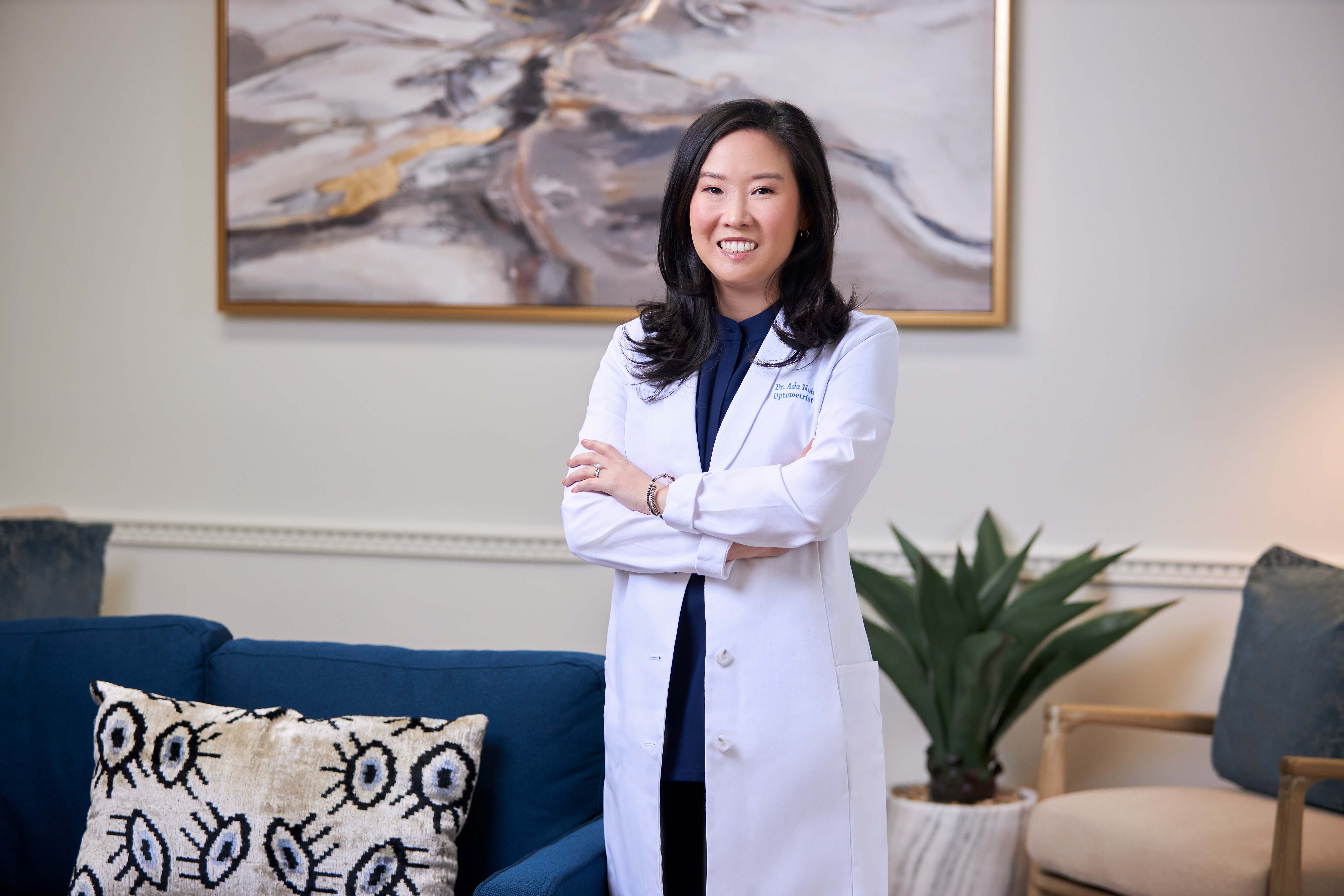
Table of Contents
What Is a Dry Eye Practice?
A dry eye practice is a specialty-focused model dedicated to diagnosing and treating ocular surface disease while providing comprehensive, individualized care. While many optometrists incorporate dry eye treatment into their practices, a growing number are building dedicated clinics and specialty dry eye practices designed around longer appointments, advanced diagnostics, and customized treatment plans. As awareness of dry eye disease continues to increase, these practices are creating new opportunities for patient care and redefining what success looks like in modern optometry.
For Dr. Noh, however, the journey into dry eye care was not part of some master plan. In fact, it emerged during one of the most difficult periods of her career.
Why Burnout Led to a Career Pivot
Like many young doctors, Dr. Noh entered practice carrying significant student loan debt and a strong desire to succeed. She threw herself completely into her career, working relentlessly because she wanted to eliminate the financial burden hanging over her head. Years of long hours and constant work eventually produced results, but they also produced burnout. Despite outward success, she found herself questioning whether she could continue practicing this way for another thirty years.
The answer was no.
Instead of accepting unhappiness as the price of success, she gave herself permission to reimagine her career. She considered several different paths, even entertaining professions outside of healthcare. But rather than abandoning optometry altogether, she discovered that dry eye care was the part of patient care she enjoyed most. Her own experiences with dry eye symptoms gave her empathy for patients, and she realized that helping people with chronic ocular surface disease brought a sense of purpose she had been missing. That decision ultimately changed the trajectory of her career and laid the foundation for a thriving specialty dry eye practice.
How to Start a Dry Eye Clinic Without Waiting for Perfect Conditions
Many doctors searching for how to start a dry eye clinic assume they need the perfect location, every piece of equipment, and a complete business plan before opening their doors. Dr. Noh’s story proves otherwise.
After relocating from Philadelphia to Little Rock, Arkansas, she essentially started from zero. She had no patient base, no established referral network, and no guarantee that her vision would succeed. In fact, her first patient sat in a kitchen chair because she had not yet purchased a proper exam chair. She had no staff and performed every aspect of the business herself. Looking back, she laughs about those early days, but they illustrate one of the most important lessons in optometry entrepreneurship: progress matters more than perfection.
Starting before feeling ready allowed her to learn, adapt, and grow. Had she waited until every variable was perfect, she might still be waiting today.
Why Relationships Drive Dry Eye Practice Growth
While many conversations about building a dry eye practice focus on technology, Dr. Noh believes relationships are the true engine behind sustainable growth. Building a cold start optometry practice required her to put herself in uncomfortable situations repeatedly. She attended networking events, introduced herself to physicians across multiple specialties, and often sat patiently in waiting rooms simply hoping for an opportunity to establish a relationship.
Those efforts did not produce immediate results, but over time they created trust. Referrals began to appear. One relationship led to another, and eventually the need for constant cold calling diminished because the foundation had already been established. The lesson is simple: dry eye practice growth is rarely built overnight. It is built through consistency, authenticity, and a willingness to keep showing up long before results become visible.
Why Mindset Matters More Than Technology
Doctors often assume that success begins with equipment. While advanced technology certainly plays a role in a modern dry eye practice, Dr. Noh believes mindset matters far more than machines. Her journey was built on perseverance, grit, and the willingness to continue despite uncertainty.
One of the philosophies that guided her throughout those early years came from a close friend who reminded her that success is often a numbers game.
As Dr. Noh explained, "You throw 100 darts, and if one sticks, you gotta throw the other 99 to get the one."
That mindset allowed her to stop fearing rejection and focus on consistency. Instead of viewing setbacks as failures, she learned to see them as necessary steps toward growth. That perspective continues to shape her approach to optometry entrepreneurship and serves as a reminder that meaningful success rarely happens overnight.
Building a Practice That Supports Life
Ironically, after creating a successful specialty dry eye practice, Dr. Noh discovered she was beginning to recreate the same burnout she had worked so hard to escape. Fear of failure caused her to overextend herself and sacrifice boundaries. Eventually, she realized that a successful business should support the life she wanted rather than consume it.
After difficult reflection, she chose to sell the practice she had built and prioritize her marriage and long-term happiness. The decision was not a sign of failure. Instead, it represented growth and a deeper understanding that success evolves. Today, as she prepares to build again, she carries with her not only more knowledge and experience, but also a clearer understanding of what truly matters.
The next chapter will not simply be about growth. It will be about building a practice that supports longevity, fulfillment, and balance.
Dream Bigger Than Your Practice
Perhaps the greatest lesson from Dr. Ada Noh’s story is that optometrists are never trapped by traditional career paths. A dry eye practice did not exist as a clearly defined model just a decade ago, yet today doctors across the country are proving that specialty care can transform both patient outcomes and professional fulfillment.
Her story is ultimately one of reinvention. It is a reminder that careers evolve, passions develop, and success is rarely linear. More importantly, it demonstrates that optometrists have the ability to create practices that align with who they are and the lives they want to live.
The future of optometry will not belong to those who simply follow established paths. It will belong to those willing to dream bigger, embrace change, and build something meaningful.
Building a successful dry eye practice requires more than technology and business plans. It requires vision, perseverance, and the courage to embrace change when opportunities arise. Dr. Ada Noh’s journey is proof that careers are not fixed and that purpose often reveals itself through the willingness to start before feeling completely ready.
If you’re passionate about specialty eye care, practice ownership, and the future of optometry, subscribe to Defocus Media, the #1 podcast network in eye care, for more conversations that educate, inspire, and challenge the way we think about the profession.
The blueprint is in front of you. The question is—what are you going to do with it?

