



Podcast: Play in new window | Download | Embed
Subscribe: Apple Podcasts | Spotify | Amazon Music | Android | RSS
Myopia myths continue to shape how doctors and families understand childhood myopia, even as myopia management and myopia control have become increasingly important parts of pediatric eye care. With research, technology, and clinical approaches continuing to evolve, separating long-held assumptions from evidence-based care can be challenging.
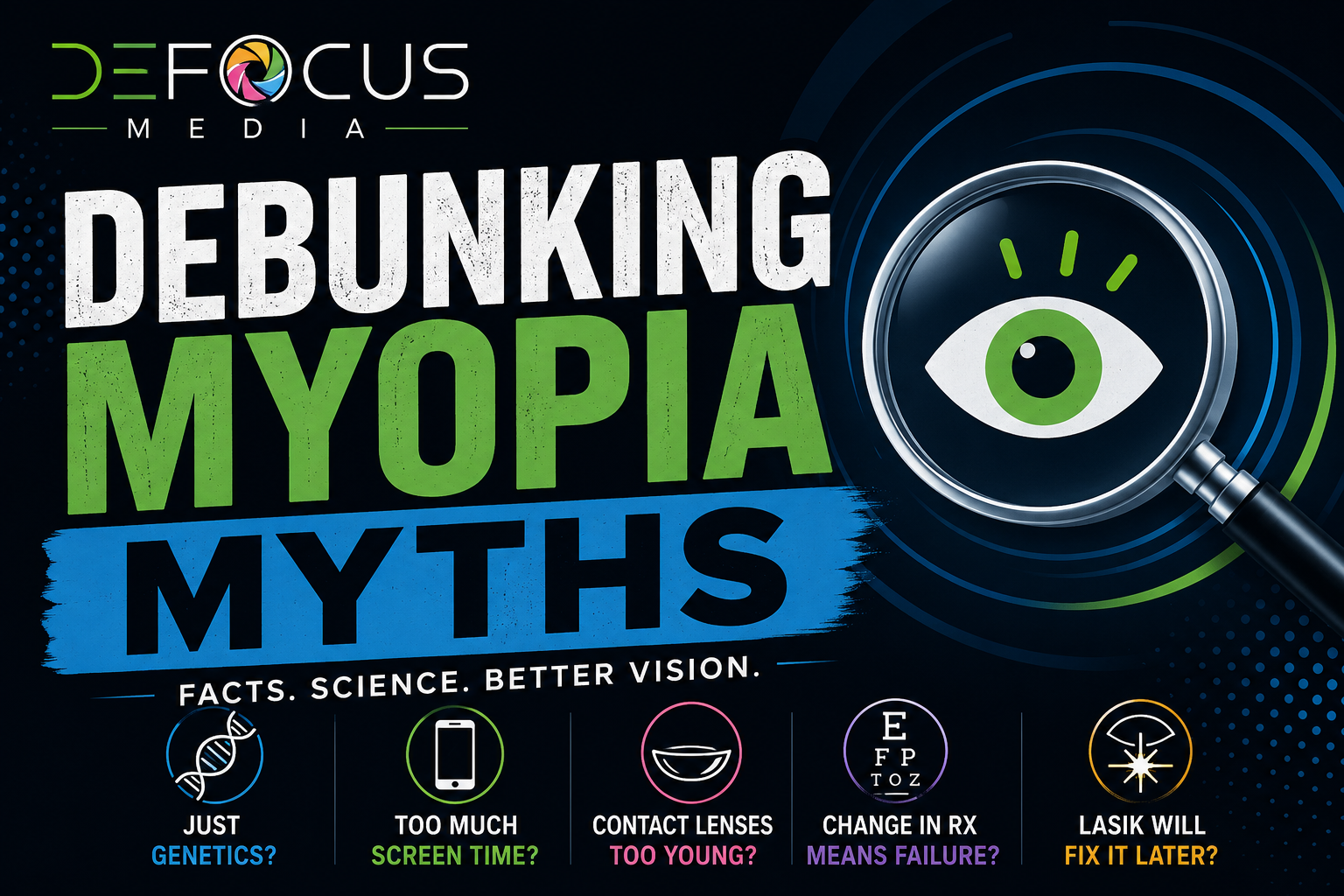
Dr. Jennifer Lyerly and Dr. Justin Kwan tackle 10 of the most common myopia myths influencing conversations in the exam room. From parent questions to clinician misconceptions, their discussion provides evidence-based answers and explores what eye care professionals should reconsider when approaching myopia management and myopia control.
In Partnership with CooperVision
Table of Contents
What Is Myopia Management?
Myopia management, or myopia control, refers to evidence-based treatments designed to slow childhood myopia progression by reducing excessive axial elongation and lowering the lifetime risk of retinal detachment, glaucoma, cataracts, and myopic maculopathy associated with high myopia.
Rather than simply prescribing stronger glasses every year, modern myopia management focuses on preserving lifelong ocular health through early intervention.
Myopia Myth #1: Myopia is Just Genetics
Perhaps the most common misconception parents express is that childhood myopia is inevitable because one or both parents are nearsighted.
While genetics certainly influences risk, current research suggests environmental factors—including outdoor activity, near work, and visual behaviors—play a substantial role in the development and progression of myopia.
Rather than accepting worsening vision as unavoidable, clinicians now have evidence-based opportunities to intervene early and influence long-term outcomes through proactive myopia management. Genetics may increase risk, but they do not eliminate opportunity.
Myopia Myth #2: Screens and Video Games Are Causing Myopia
Parents frequently ask whether phones, tablets, or video games are responsible for their child’s worsening prescription. While prolonged screen use warrants attention, evidence suggests that increasing time spent outdoors may provide greater protective benefits than simply reducing screen time alone.
The message for families should focus less on punishment and more on replacement. Encouraging more outdoor time while supporting healthy visual habits may be more practical than simply limiting devices.
Sometimes the best prescription isn’t fewer screens—it’s more sunshine.
Myopia Myth #3: The Prescription Changed, So Myopia Control Isn’t Working
One of the biggest challenges in myopia management is setting expectations.
Parents often expect treatment to completely stop prescription changes. However, evidence-based myopia control therapies are designed to slow progression, not eliminate progression entirely.
Current studies demonstrate approximately 50–60% reduction in myopia progression with many available treatment options compared with traditional correction alone. A child whose prescription continues to change slowly during treatment may still be experiencing excellent clinical success.
Managing expectations from the very first visit often leads to better long-term treatment adherence and greater parent confidence.
Myopia Myth #4: Can’t My Child Just Get LASIK Later?
LASIK corrects refractive error. It does not shorten an elongated eye. Even after refractive surgery, patients with high myopia continue to carry elevated risks for retinal detachment, glaucoma, cataracts, and myopic retinal degeneration because axial elongation remains unchanged.
Myopia management focuses on preventing excessive eye growth during childhood before those structural risks become permanent. This is why early intervention matters.
Myopia Myth #5: My Child Is Too Young for Contact Lenses
Many parents hesitate when contact lenses become part of the myopia management discussion.
Clinical experience demonstrates that appropriately selected elementary-aged children can successfully wear daily disposable contact lenses under proper supervision. Age alone should not determine candidacy.
Fortunately, today’s clinicians can individualize treatment using FDA-approved myopia-control contact lenses, such as MiSight® 1 day, specialty spectacle lenses, or pharmaceutical therapies, based on each child’s needs, risk profile, and family preferences.
Myopia Myth #6: You Need Axial Length Measurements to Practice Myopia Management
Among clinicians, this may be one of the most persistent misconceptions.
Axial length monitoring provides valuable information regarding structural eye growth, but it represents the research gold standard—not the current standard of care.
Optometrists should never delay evidence-based myopia management simply because advanced instrumentation is unavailable.
Clinical history, refractive progression, comprehensive examination findings, and risk assessment remain valuable tools for initiating treatment. The priority should always be treating children—not waiting for technology.
Myopia Myth #7: Progressive or Anti-Fatigue Glasses Are Effective Myopia Control Treatments
Historically, some clinicians attempted myopia control using progressive addition lenses or anti-fatigue spectacles.
While traditional progressive and anti-fatigue lenses may provide visual comfort benefits, newer myopia control spectacle lenses, such as Essilor Stellest® lenses, have been specifically designed to slow childhood myopia progression. These technologies, along with evidence-based contact lens options, provide clinicians with more effective tools for managing pediatric myopia than conventional single-vision or progressive lenses.
Clinicians should prioritize treatments supported by contemporary clinical evidence.
Myopia Myth #8: Axial Length Always Changes Before Prescription Changes
Another misconception involves the relationship between axial elongation and refractive progression.
While axial length monitoring provides valuable insight into structural growth, refractive change and axial elongation generally occur together once childhood myopia has developed.
Understanding this relationship helps clinicians communicate more effectively with families while avoiding unnecessary confusion regarding treatment success.
Myopia Myth #9: The 20/20/20 Rule Prevents Myopia
The 20/20/20 rule has become synonymous with reducing digital eye strain. However, its role in slowing childhood myopia progression remains limited.
Current evidence suggests that increasing outdoor activity and taking longer breaks from prolonged near work provide greater benefit than brief visual breaks alone. Lifestyle modification should complement—not replace—evidence-based myopia management.
Myopia Myth #10: Apple Screen Distance Alerts Are Enough for Myopia Control
Modern technology includes screen-distance notifications and screen-time reminders designed to encourage healthier visual habits. While these tools may reinforce healthy behaviors, they should not be viewed as primary therapies for myopia management. Behavioral modification works best when combined with proven optical interventions and increased outdoor activity.
Technology can support healthy habits, but it cannot replace evidence-based clinical care.
How Can Optometrists Explain Myopia Management to Parents?
One of the simplest explanations may also be the most effective.
When today’s parents were children, worsening prescriptions were accepted as normal because treatment options did not exist. Today, evidence-based myopia management provides clinicians with tools to slow progression and reduce long-term ocular health risks.
By shifting the conversation from stronger glasses to healthier eyes, optometrists help families understand that myopia control is an investment in lifelong vision rather than simply another prescription.
Where Can Doctors Learn More About Myopia Management?
Research surrounding childhood myopia continues to evolve rapidly.
Continuing education programs, peer-reviewed literature, national optometric meetings, and organizations dedicated to myopia management provide clinicians with valuable resources for answering patient questions and implementing evidence-based care.
As knowledge grows, so does the opportunity to improve outcomes for future generations.
Want to stay at the forefront of myopia management, myopia control, and the latest innovations in eye care? Subscribe to the Defocus Media Podcast Network for expert interviews, clinical insights, practice management strategies, and evidence-based conversations designed to help optometrists elevate patient care and grow their practices.
Join thousands of eye care professionals who turn to Defocus Media—Optometry’s #1 Podcast Network—for the latest education, innovation, and inspiration shaping the future of the profession.

