

Podcast: Play in new window | Download | Embed
Subscribe: Apple Podcasts | Spotify | Amazon Music | Android | RSS
Clinical Oculomics and artificial intelligence (AI) in optometry are quickly becoming one of the most important topics of conversation in eye care. During a recent Defocus Media podcast, Dr. Osama Said joined Dr. Darryl Glover to discuss how AI, clinical oculomics, and predictive technology could completely reshape the future of healthcare.
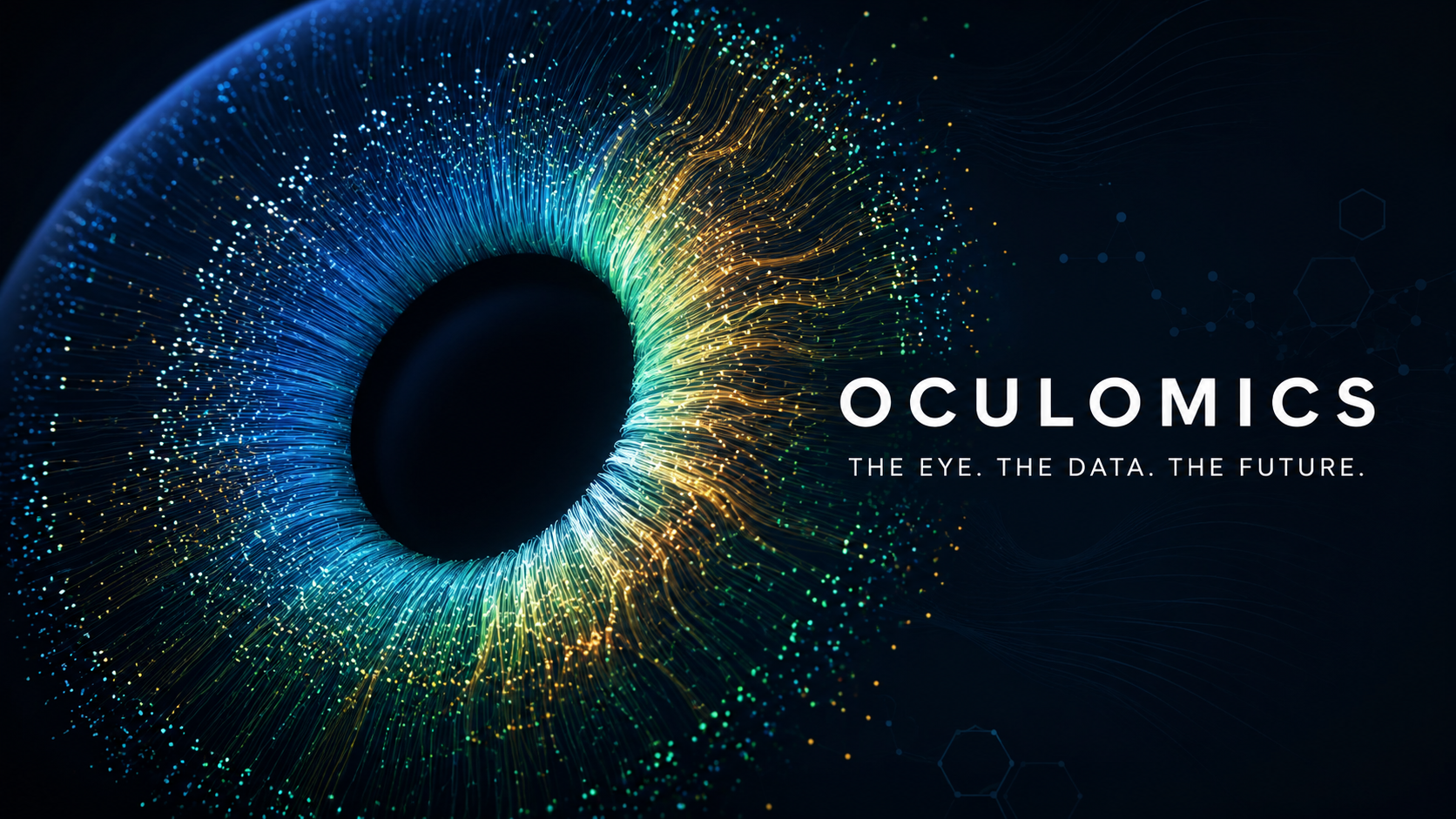
The conversation focused on a major shift happening within optometry. Eye care professionals are no longer only evaluating vision and ocular disease. Through advanced imaging, AI, and biomarker analysis, optometrists may soon help predict systemic conditions such as cardiovascular disease, dementia, and Parkinson’s disease years before symptoms appear.
Key Takeaways
- AI will impact every aspect of optometry, from scheduling to disease detection.
- Clinical oculomics could position optometrists as leaders in predictive healthcare.
- Eye care professionals must embrace AI now or risk losing ownership of the profession’s future.
What Is Clinical Oculomics?
Clinical oculomics is the study of biomarkers found throughout the eye that can help predict systemic disease. While optometrists have long associated retinal findings with diabetes or hypertension, AI is now revealing that nearly every structure within the eye may provide valuable health data.
Dr. Said explained that the retina is only one piece of the puzzle. Tear film, corneal tissue, choroidal structures, and even ocular blood vessels may eventually help predict future health outcomes. According to Dr. Said, this technology could transform routine eye exams into powerful preventative healthcare screenings.
One of the most impactful moments in the conversation centered around a landmark 2018 Google study. Researchers uploaded nearly 300,000 retinal images into an AI model and asked one question: could the system predict cardiovascular disease risk? The results were staggering. The AI model could also identify gender, smoking status, blood pressure, and approximate age from retinal photos alone.
For optometrists, this represents a massive opportunity.
How AI in Eye Care Could Improve Patient Experience
One of the strongest themes throughout the discussion was how AI could improve efficiency and patient experience inside the exam lane.
Dr. Said described a future where AI-powered scheduling systems no longer rely on generic 15-minute appointment blocks. Instead, systems could analyze patient history, exam complexity, prescription trends, and dilation needs to predict exactly how much time each patient requires.
A young patient with stable vision may only need a brief exam, while a glaucoma patient with multiple imaging tests could automatically receive a longer appointment slot. This creates a smoother workflow for doctors while reducing wait times and patient frustration.
The discussion also explored how AI-powered smart glasses and voice-assisted documentation may eventually eliminate the need for doctors to constantly look down at computers during exams.
“That patient has fifteen OCTs, and they’ve got fifteen photos, and I’ve done topography three times, and I’ve done five visual fields. Who can put all that data together? That’s AI.” — Dr. Osama Said
For Dr. Glover, this evolution is about much more than speed.
The ability to maintain eye contact, communicate effectively, and fully focus on the patient journey could significantly strengthen trust and improve healthcare outcomes.
Why Optometrists Must Embrace AI Now
A major point throughout the podcast was that AI is not replacing optometrists. Instead, it is becoming a tool that enhances clinical decision-making.
Dr. Said used a powerful analogy comparing AI to airplane autopilot systems. Modern airplanes can technically fly themselves, yet pilots remain essential. Similarly, AI can analyze enormous amounts of data, but optometrists are still needed to interpret results, communicate findings, and guide patient care.
The larger concern is whether optometry will fully embrace this technology before other healthcare sectors take ownership of it.
According to Dr. Said, optometry already controls much of the data infrastructure needed for clinical oculomics. Optometrists own the retinal cameras, OCT devices, topographers, and imaging systems, generating valuable patient data every day.
If the profession fails to act, other healthcare industries may eventually step into that space.
“We are in San Francisco right now,” Dr. Said explained while comparing the profession’s current position to the Gold Rush era. “So let’s not let anyone else come in.”
The Importance of Diversity in AI Data
One of the most important parts of the conversation centered around healthcare equity and representation in AI datasets.
Dr. Said warned that many current medical databases disproportionately represent certain populations, which can create inaccurate predictive models for underrepresented groups. If most retinal images come from one demographic group, AI systems may not perform equally well across all populations.
He encouraged optometrists to consciously collect more diverse patient data whenever possible to ensure that future AI systems accurately reflect the patients who walk into practices every day.
This conversation highlighted an important reality: the future of AI in healthcare cannot only focus on innovation. It must also focus on inclusion.
Final Thoughts
The future of optometry is no longer limited to refractions and routine eye exams. AI and clinical oculomics are opening the door for optometrists to become leaders in predictive healthcare, early disease detection, and personalized medicine.
The profession already possesses the technology, the patient access, and the clinical expertise to lead this transformation. The next step is action.
“We gotta all be in this together,” Dr. Said explained. “The biggest mistake we can make is sitting on the sidelines and waiting for someone else to solve it.”
The future of healthcare may very well begin inside the eye exam room.
To learn more about Dr. Said’s work and the future of flexible optometry opportunities, visit the DayOD platform and explore how technology is helping reshape the profession.
For more conversations around artificial intelligence, innovation, clinical strategy, and the future of healthcare, follow Defocus Media, the #1 eye care podcast network, featuring leading voices across optometry, ophthalmology, optical, and healthcare innovation.

