



Podcast: Play in new window | Download | Embed
Subscribe: Apple Podcasts | Spotify | Amazon Music | Android | RSS
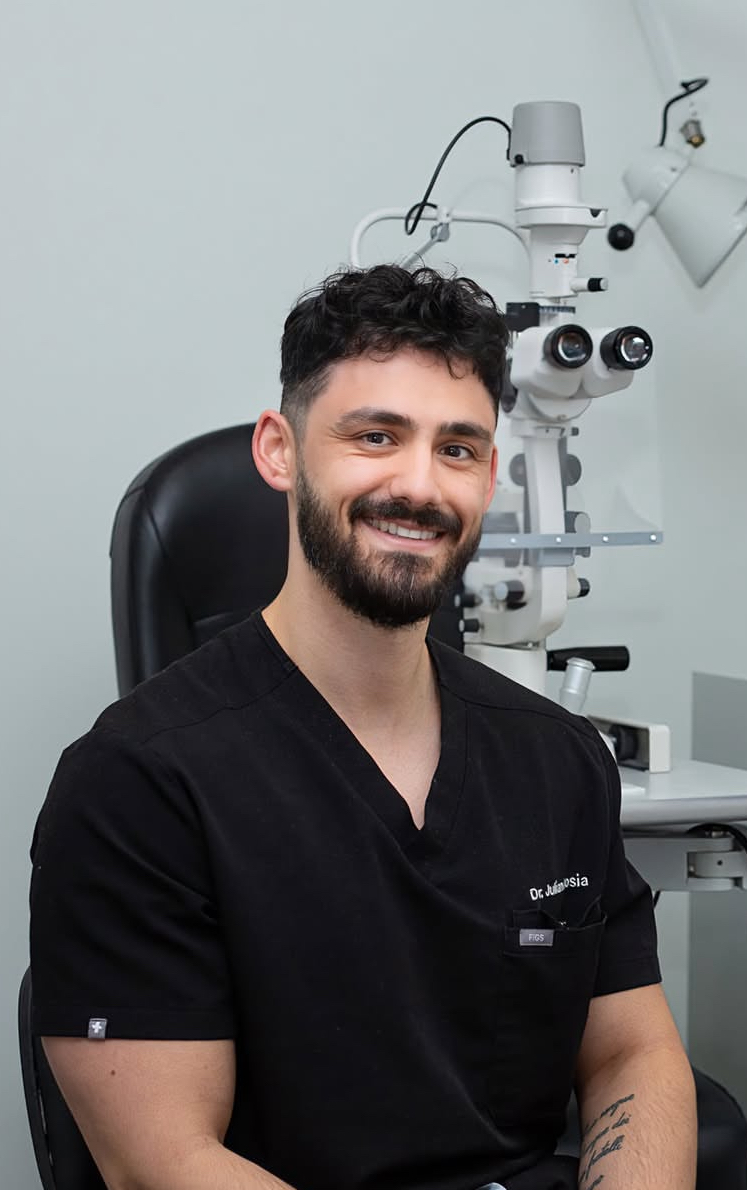
Transitioning from optometry school into clinical practice can feel overwhelming. For many new graduates, the pressure to choose the right career path, build confidence in patient care, and find a specialty can create uncertainty. During a recent conversation on Defocus Media, Dr. Julian Prosia shared how embracing failure, staying disciplined, and focusing on patient outcomes helped him become a leader in amniotic membrane treatment, dry eye innovation, and ocular surface disease management through Ophthalogix Canada.
Key Takeaways
- Confidence in eye care comes from education, repetition, and learning through failure.
- Amniotic membrane technology is becoming increasingly important in the management of advanced dry eye and ocular surface disease.
- Strong partnerships, mentorship, and education helped Ophthalogix become a leader in biologic eye care innovation.
Finding Purpose Through Dry Eye Care
After graduating from Nova Southeastern University, Dr. Prosia entered a high-volume ophthalmology setting where he often saw nearly 80 patients per day. While the experience was intense, it forced him to grow quickly as a clinician and sharpen his ability to connect with patients.
Over time, he saw more than 30,000 dry eye patients and became deeply invested in improving patient outcomes. One patient experience, in particular, changed everything. A patient struggling with severe ocular surface disease and emotional distress responded dramatically to amniotic membrane treatment. That moment reinforced his commitment to helping people through dry eye care and inspired him to dedicate his career to the specialty.
Rather than chasing success for recognition or income, Dr. Prosia repeatedly emphasized that his motivation comes from helping others feel better and improving the quality of life.
Why Failure Builds Better Optometrists
One of the strongest themes throughout the discussion was the importance of embracing failure early in a career. According to Dr. Prosia, many new graduates fear making mistakes because they feel unprepared or uncertain. However, he believes confidence is built through uncomfortable experiences.
He explained that seeing difficult cases, studying after clinic hours, reviewing patient outcomes, and continuously refining protocols were critical parts of his development.
That mindset helped him evolve into a recognized leader in dry eye innovation. Instead of avoiding challenges, he leaned into them. He described spending thousands of hours studying dry eye disease, reviewing literature, and learning how to improve patient communication and treatment strategies.
For optometry students and young optometrists, the message was clear: confidence does not appear overnight. It is earned through discipline, consistency, and a willingness to grow.
The Importance of Passion in Eye Care
Throughout the conversation, Dr. Prosia consistently returned to one idea: passion creates sustainability.
He explained that pursuing eye care solely for financial success is rarely fulfilling in the long-term. Instead, he encouraged clinicians to identify what genuinely excites them and build around it. For him, that passion became education, mentorship, dry-eye innovation, and the advancement of amniotic membrane technology.
That passion eventually expanded beyond the exam lane into social media education and entrepreneurship. Today, he uses digital platforms to educate patients and eye care professionals about dry eye disease and to help practices across Canada gain access to advanced therapies.
His story highlights an important lesson for eye care professionals: building expertise often starts with identifying what naturally motivates and energizes you.
The Future of Amniotic Membrane and Dry Eye Innovation
When discussing the future of dry eye innovation, Dr. Prosia identified three areas that are rapidly evolving:
1. Biologics and Amniotic Membrane Technology
He believes biologics represent one of the biggest opportunities in ocular surface disease management. Treatments involving growth factors, PRP, stem cell-based therapies, and amniotic membrane technology are providing clinicians with more tools to manage severe disease and support corneal healing.
These therapies are especially important for patients with autoimmune disease, neurotrophic keratitis, corneal neuralgia, and advanced ocular surface disease.
2. Advanced IPL Technology
Dr. Prosia also predicts major advancements in IPL technology. While IPL is already widely used for meibomian gland dysfunction and evaporative dry eye, he believes future iterations will become more targeted and even more effective.
3. Blink Rehabilitation and Muscle Stimulation
Another emerging area involves dynamic muscle stimulation technology designed to improve blink mechanics and blink strength. These technologies may help clinicians more effectively address incomplete blinking and poor ocular surface protection in the future.
The Biggest Gap in Dry Eye Care
One of the most valuable parts of the conversation centered around the biggest challenge facing dry eye innovation today: understanding how to approach each patient individually.
Dr. Prosia explained that dry eye disease cannot simply be categorized into evaporative or aqueous-deficient subtypes anymore. Instead, clinicians must focus on identifying root causes and building customized treatment strategies for each patient.
This shift requires more than memorizing treatment algorithms. It requires understanding pathophysiology, blink dynamics, inflammation, nerve health, meibomian gland function, and patient lifestyle factors.
That patient-centered approach aligns with where many leaders in the dry eye space believe the profession is headed.
Building a Business in Eye Care
In addition to becoming a respected dry eye specialist, Dr. Julian Prosia launched Ophthalogix Canada after recognizing a major gap in access to biologic therapies and amniotic membrane treatment across Canada.
After performing nearly 2,000 amniotic membrane procedures while working in Florida, Dr. Prosia saw firsthand how these treatments could improve severe dry eye disease, neurotrophic keratitis, recurrent corneal erosions, and ocular surface disease.
Together with his brother, who manages the business side of the company, Dr. Prosia built Ophthalogix Canada around education, innovation, and improving access to advanced dry eye care. The company not only distributes amniotic membrane technology, but also focuses heavily on doctor education, clinical training, conference lectures, and helping eye care professionals better understand biologic therapies and ocular surface disease management.
Within just two years, Ophthalogix Canada expanded into more than 150 practices and over 15 hospitals throughout Canada, becoming the country’s only dedicated provider focused specifically on amniotic membrane technology in eye care.
For many eye care professionals, Dr. Prosia’s journey highlights how identifying an unmet need, investing in education, and building strong partnerships can create meaningful innovation in modern optometry.
The Power of Partnerships and Mentorship
Another major theme throughout the discussion was the importance of surrounding yourself with supportive people.
Dr. Prosia credited much of his success to mentors, colleagues, friends, and family members who encouraged him during difficult moments.
He emphasized that successful people in optometry are rarely competing against each other. Instead, the strongest leaders are often the ones helping others grow.
That collaborative mindset continues to shape modern optometry, especially within specialty care and education.
Final Thoughts
Dr. Darryl Glover and Dr. Prosia’s conversation highlighted an important truth about modern eye care: growth happens outside of comfort zones.
Whether it involves advancing amniotic membrane technology, improving dry eye innovation, building Ophthalogix Canada, or mentoring future optometrists, Dr. Julian Prosia continues to show how passion, education, and meaningful partnerships can create lasting impact throughout the eye care industry.
To hear more conversations like this featuring industry leaders, innovators, and game changers shaping the future of eye care, be sure to subscribe to Defocus Media, optometry’s #1 podcast network. From dry eye innovation and practice management to technology, leadership, and entrepreneurship, Defocus Media continues to bring eye care professionals the conversations helping move the profession forward.
Subscribe, stay connected, and continue learning from some of the brightest minds in optometry and ophthalmology.

